Quick answer: Open Influencers, search by niche, platform, audience size, engagement rate, and location, then filter to the micro-influencer range (roughly 1K–100K followers). Review each profile's engagement metrics and audience demographics, save the best matches, and reach out to build a campaign.
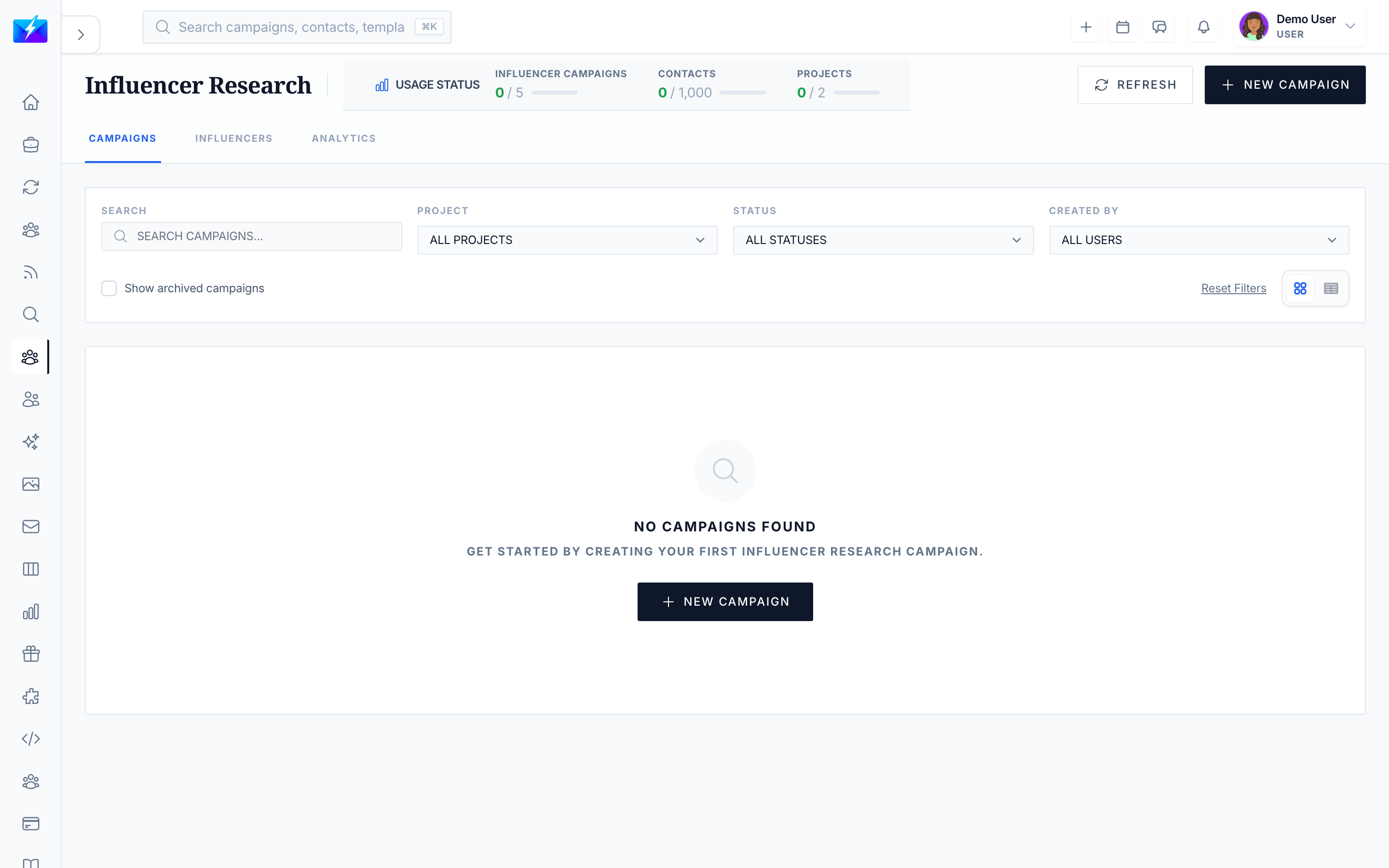
Micro-influencers often deliver better ROI than celebrities: smaller, highly engaged, niche audiences that trust their recommendations. OutreachBox's Influencer Research helps you find, vet, and engage the right ones.
Before you start
Define the audience, region, platform, and campaign outcome. Decide how you will assess fit beyond follower count.
Practical example
For a niche B2B offer, compare creators who regularly explain the relevant workflow. Review recent content, discussion quality, and audience overlap before proposing a collaboration.
Check your result
If an account looks promising only because of its size, inspect recent activity and relevance. Estimated engagement or research output does not confirm genuine followers or campaign results.
What is a micro-influencer?
A micro-influencer typically has a smaller but highly engaged following (often ~1K–100K) in a specific niche. They usually have higher engagement rates and more audience trust than mega-influencers — which is exactly what you want to filter for.
How to find the right micro-influencers
- Navigate to Influencers from the main menu.
- Enter your search criteria:
- Niche/topic — match it to your brand.
- Platform — Instagram, TikTok, YouTube, etc.
- Audience size — set a range for micro-influencers.
- Engagement rate — prioritize high engagement.
- Location — for geo-relevant campaigns.
- Apply filters and search.
- Review the matching influencer profiles.
How to vet an influencer profile
Each profile includes the data you need to judge fit:
| What to check | Why it matters |
|---|---|
| Follower count | Confirms micro-influencer range |
| Engagement metrics | High engagement beats raw reach |
| Content analysis | Ensures topical and brand fit |
| Audience demographics | Confirms they reach your customers |
| Contact information | Lets you reach out |
How to launch an influencer campaign
- Save the influencers that fit.
- Click Create Campaign and select your influencers.
- Define campaign goals and budget.
- Launch and track relationships, engagement, and performance.
Best practices for choosing micro-influencers
- Match niche to brand — relevance beats reach every time.
- Prioritize engagement rate over follower count.
- Verify authenticity — watch for fake or inflated followings.
- Build real relationships, not one-off transactions.
- Track ROI so you reinvest in the influencers that perform.
Frequently Asked Questions
Why choose micro-influencers over big influencers?
Micro-influencers usually have higher engagement rates, more niche-relevant audiences, and greater follower trust — often producing better ROI than larger, more expensive influencers.
How do I know if an influencer's audience is real?
Check engagement metrics and audience demographics in their profile. Suspiciously low engagement relative to follower count can indicate fake followers.
What's a good engagement rate?
It varies by platform and niche, but for micro-influencers, higher-than-average engagement for their follower tier is a strong signal. Compare candidates within the same range.
Can I run a campaign with multiple influencers?
Yes — save several influencers, create a campaign, select them, set goals and budget, and track performance across the group.
Related articles
- How to Build a Targeted Prospect List
- How to Run a Cold Email Campaign
- How to Track Email Campaign Performance
The right micro-influencer is a niche match with real engagement — filter for fit, not just follower count.