Quick answer: AEO (Answer Engine Optimization) is the practice of optimizing your content so AI assistants and answer engines — like ChatGPT, Google's AI overviews, and Perplexity — cite and recommend you. With OutreachBox you do AEO by generating clearly structured, question-led content around AI/LLM keywords, covering topics comprehensively, and adding FAQs and structured data so machines can extract direct answers.
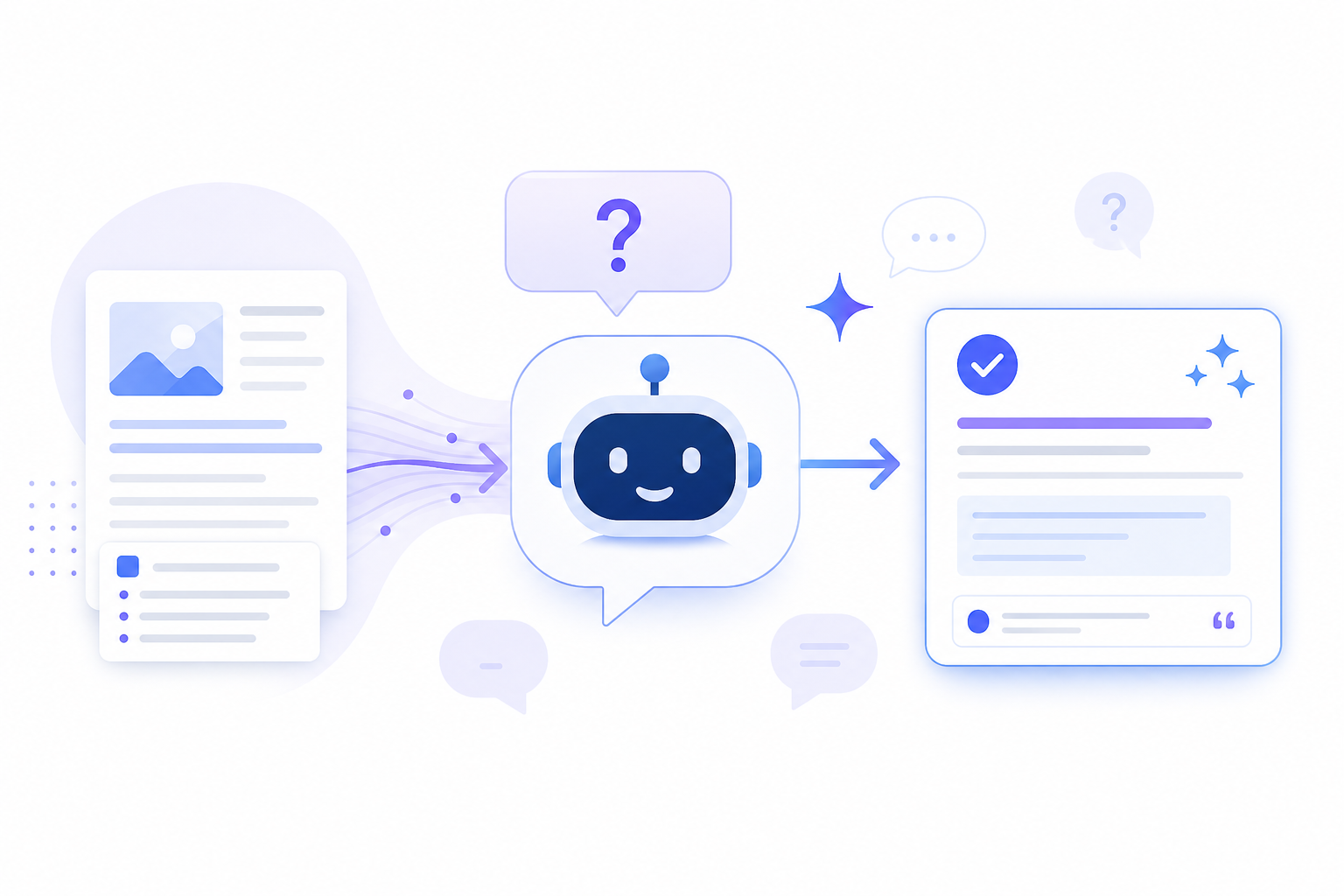
Search is no longer just ten blue links. People increasingly ask AI assistants questions and get a single synthesized answer. Answer Engine Optimization (AEO) aims to make your content easier to discover, understand, and reference. It cannot guarantee a citation or recommendation. Here's what AEO is and how to do it in OutreachBox.
Before you start
Choose a real audience question and gather the evidence needed to answer it. Make sure the page can be crawled and its main answer is available as text.
Practical example
For “How do I verify a prospect list?”, give a direct definition, ordered steps, an example of verification results, and limits of verification. Link to the detailed setup guide instead of repeating it on every page.
Check your result
If a page is not cited by an AI service, that alone does not identify a technical fault. Check accessibility and content quality, then monitor relevant questions over time; citations are not guaranteed.
SEO vs. AEO: what's the difference?
| SEO | AEO | |
|---|---|---|
| Target | Search engine result pages | AI assistants and answer engines |
| Goal | Rank a page | Be the cited answer |
| Content style | Keyword-optimized pages | Clear, structured, question-led answers |
| Key signals | Links, keywords, rankings | Entity clarity, structured data, comprehensiveness |
The good news: strong AEO and strong SEO overlap heavily. Both reward clear, comprehensive, well-structured content.
How to optimize for AI search with OutreachBox
1. Lead with the question and the answer
Write content that states the question explicitly (in a heading) and gives a direct, concise answer right away. Answer engines extract these. Every article in this knowledge base, for example, opens with a one-line Quick answer.
2. Research AI/LLM keywords
Use the LLM Keywords feature to suggest natural-language questions and related terms to investigate. These are generated ideas, not measured query logs from AI services.
3. Cover topics comprehensively
Answer engines favor sources that cover a topic end to end. Use AI long-form articles and blog generation to build thorough, authoritative pieces.
4. Add FAQs and structured data
Include a clear Frequently Asked Questions section with direct answers. FAQs give readers clear answers to related questions. Structured data should describe what is visible on the page. Google states that no special schema or AI-specific file is required for AI Overviews or AI Mode; markup alone does not secure inclusion.
5. Build authority with outreach
AI engines weigh trust and citations. Earn mentions and links with prospect research and cold email outreach.
Best practices
- Put the answer first; supporting detail second.
- Use descriptive, question-style headings (H2/H3).
- Define entities clearly — who you are, what your product does, who it's for.
- Keep facts current; answer engines favor fresh, accurate sources.
- Pair AEO with SEO — they reinforce each other.
Frequently Asked Questions
What does AEO stand for?
AEO stands for Answer Engine Optimization — optimizing content so AI assistants and answer engines surface and cite it as the answer to a user's question.
Is AEO different from SEO?
Yes, but they overlap. SEO aims to rank pages in search results; AEO aims to be the answer AI assistants give. Clear, structured, comprehensive content helps with both.
How does OutreachBox help with AEO?
It helps you find natural-language and LLM keywords, generate comprehensive question-led content, and publish consistently — and the knowledge base itself uses structured data and FAQ markup that answer engines can read.
Does adding FAQs really help?
FAQs can make related answers easier to find and understand. They do not guarantee AI citations, better rankings, or a search rich result. Write them for questions your readers actually have.
Sources
- Google Search Central: AI features and your website
- Google Search Central: Creating helpful, reliable, people-first content
Related articles
- How to Do SEO With OutreachBox
- How to Find AI-Generated (LLM) Keywords
- How to Write Long-Form Articles With AI
AEO is about being the answer, not just a result — write clearly, structure everything, and cover topics in full.